Full Width Scroll

How are you feeling today?|Welcome Back|See you soon

air

Elise Wouters

"[Art is] not just a way to learn about myself. It's also a place for creating myself. Either different versions of me, or enlarging aspects of my life or dreams…"


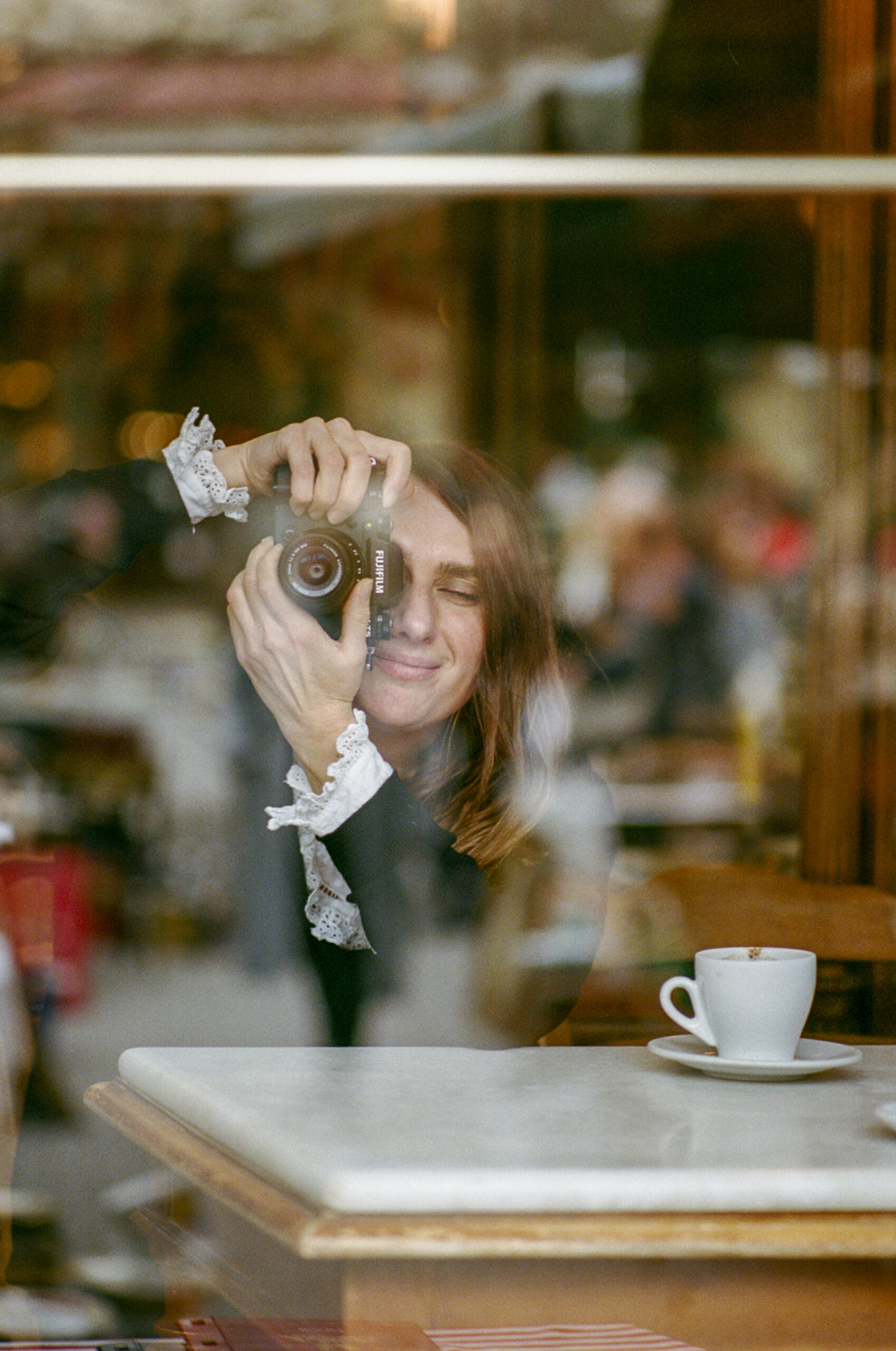
London-based Belgian photographer and writer, Elise Wouters, explores solitude, memory and self-representation across text, materials and film. Her completely analogue process cross-pollinates handwritten messages and self-portraits with found objects as a means to revisit a memory or manifest for the future.


For SPACE REIMAGINED, the site-specific series of room takeovers curated by House of Shila, Wouters dove headlong into solitude and nostalgia as a means of recontextualising the suite. The works she produced span media and time: from black and white self-portraits handprinted on Japanese washi paper and silk fabrics, to long-unopened love letters plucked from the Monastiraki market and scattered amongst the room’s decorative arrangements and hidden in the artist’s favourite books.

The result – a meditation on memory, femininity, impermanence and poetic retreat – makes up an exclusive capsule collection on display in the Mona suite and available via the HOS Shop.

We spoke to Wouters about vulnerability, memory, the poetics of space and the importance of finding time to slow everything down.

Artist Portraits & Interview EFTIHIA STEFANIDI

HOS: What was your initial reaction to the Mona suite?

EW: When I entered the suite I had no preconceptions. I let the room speak to me, exploring the fabrics and textures and using that as a basis to play around and start photographing. I’m always guided by the light. In this room especially, the light is always changing corners, directions, and I follow it around. From there, I dive deeper and explore the work itself, photographing various layers and textures.

HOS: Were there any specific elements from the room which influenced you?

EW: This curtain, a gauze fabric that’s almost transparent, inspired me to start looking at paper and transparent fabrics like silk, and explore printing on those. There is an element of chance in discovering a poetic image. I took several self-portraits during my stay, quite intuitively, but it wasn’t until the development stage that they became a narrative. Once I narrow down the selection of images I want to print, I return to a film negative the way I return to a memory. My focus changes every time I revisit it, and the final results reflect this shape-shifting process.

HOS: You’ve visited Athens many times. Was there something about the energy of Athens seen through the windows of the Mona Suite which inspired you?

EW: I love the texture of Athens. There’s a real sense of opportunity. And I love the rough sides of it. Peeling paint and the open doors of abandoned buildings. There’s creative potential. During my residency, I spent mornings walking around the city: climbing up to the Parthenon, taking in the backstreets of Kipseli, digging through boxes at the flea market and then coming back to this intimate room with my explorations still echoing inside. That’s when the sensory connections begin to take shape.

HOS: You wrote poetry for some of the works here?

EW: Yes—prose, poems, notes. When I travel, I always have lines bouncing around in my head, inspired by books I’m reading—Cavafy or Elytis. I write notes on the backs of photographs I’ve taken or found. Notes to myself or poems which don’t necessarily even speak to the photograph, but to a broader narrative I’m interested in. Sometimes they’re love notes I’ll never voice out loud, but which are made eternal on paper. In a way, that’s enough.


“I love the texture of Athens. There’s a real sense of opportunity…There’s creative potential.”


photography by EFTIHIA STEFANIDI

HOS: Was your process influenced by the fact that your work will be hung in a hotel room as opposed to a gallery or traditional exhibition space?

EW: Definitely. Space provides context to art. A hotel room is a unique setting to exhibit artwork, since people are sleeping among the pieces I created. They wake up, have their morning coffee and make love surrounded by my work. It was important for me to put intimacy at the forefront. The brittle nature of the washi paper encapsulates this. Each piece feels ephemeral, as if it could crumble in front of your eyes, yet it is surprisingly strong. The work is mounted on birchwood so the paper feels almost close enough to touch. I wanted the intimacy of the hotel room to come out in the artwork itself.

HOS: ‘Hotel room’—what does that mean for you?

EW: Opportunity. It holds a sense of potential and of anticipation. When you return to a hotel room, you still have the outside world moving inside you, but you also have the safety of the space to process the day.  


“Space provides context to art…It’s intimate…I wanted the intimacy of the hotel room to come out in the artwork itself.”


photography by EFTIHIA STEFANIDI & ALEXANDRA KOUMANTAKI

HOS: How do you see the relationship between art and interior space? 

EW: Art and space don’t just complement each other, they enrich each other. I’m interested in exploring this dialogue between the body, the spaces which surround it and how they shape one another. The rooms we live in become the site of our intimate lives. In turn, they reveal something about us. I seek out places with a history, so I can enter into a conversation with time and memory. Mona’s past life as a textile factory is felt in the bones of the building, but its sensuous, modern focus is equally evocative. It encourages a sense of play. It reminded me of that Charles Simic poem – “my secret identity is: the room is empty, and the window is open.” From there, the work begins. 

HOS: Are the works you’ve created a single edition?

EW: Yes, they’re all unique because of the nature of the process. Everything depends on how you paint the emulsion, how the image prints, the contrast, the thickness of the paper.  In the darkroom, you’re working with silver and paper, both fickle materials, and there are infinite ways to bring the initial image to life. Each piece is imperfect, and therein lies the beauty—it’s like returning to a memory and exploring how it shifts every time.

HOS: Tell me about the books you’re lending to the suite.

EW: These are books I’ve been reading while I’ve been staying here, or books which reminded me of this room. The Poetics of Space by Gaston Bachelard is one of my favourites. He writes about the poetry of a room. Wanderlust by Rebecca Solnit. The Pleasure of the Text by Roland Barthes. Three Summers by Margarita Liberaki. Some poetry by Lawrence Durrell, which I really love, especially when I’m just about to head off to the islands. I want to build a little library in the room. Maybe people will take a book or even leave one behind. 


“I’m always in communication with the past in various ways. My work yearns for this undefined something or someone, wherein the pleasure isn’t so much in obtaining, but in the journey itself.


photography by EFTIHIA STEFANIDI

HOS: What have you learned about yourself in creating these works during your residency at Mona?

EW: Frida Kahlo once said, “I’m the subject I know best, I’m the subject I want to know better.” It’s an ongoing process for me. The work is not only a way to learn about myself. It’s also a place for creating different versions of me, or enlarging aspects of my life or dreams. My work is always diaristic, and it’s as much about returning to a moment as it is about creating one. I am drawn to a sense of Sehnsucht, a nostalgia for the future. I can endlessly romanticise a moment and its potential. My work yearns for this undefined something or someone, wherein the pleasure isn’t so much in the obtaining, but in the journey itself. By repeating an image through different printing approaches, I want to capture this feeling of longing for longing’s sake.

HOS: I find fantasy and persona-creation is assisted by social media. How does your large social media following inspire, affect or influence your creativity? 

EW: I use social media as a tool to create my dream world. To create little stories to inhabit for a while. It’s a room for me to play in.

HOS: You’re also a writer. Can you talk to us about your process?

EW: There’s always a dialogue between photography and writing. I photograph that which I can’t put into words, and write about the photographs I didn’t take or the moments I might have missed. I love the tactile nature of handwriting, in the same way I love the tactile nature of analogue photography. Turning to a slow, mindful process connects me to any emotion I’m trying to express.

HOS: Do you write letters to people in real life?

EW: I still write letters, occasionally. Sometimes I send them. Sometimes I don’t. Sometimes they get lost in the post. But that’s the beauty of the process.

HOS: Is there a historical figure you’d write a letter to if you had the chance?

EW: Probably the queen of letters herself, Anaïs Nin. She’s one of my favourite writers. The letters between her and Henry Miller—there’s such a literary quality to their passionate love affair and the way they express themselves. 


“Turning to a slow, mindful process connects me to any emotion I’m trying to express.”


photography by EFTIHIA STEFANIDI

HOS: Nostalgia and longing are themes throughout your work. Is this an inherent feeling or something you tap into?

EW: I’ve always been drawn to nostalgia. Maybe it carries some association of longing for the past, but for me it’s very forward looking. It carries potential for me and my work. Nostalgia for something which could happen.

HOS: You’re travelling a lot, often by yourself. What are three things you can’t live without when you’re on the move?

EW: My camera. I take it everywhere. And it’s been through some challenging times – dropped into lakes, falling off mountains – it’s a brick. It’s survived it all. Also, I always have a pencil on me. Paper I can find anywhere—receipts, napkins. I write on anything and everything. Third item?  Sturdy walking shoes. I walk a lot.

HOS: What’s your life philosophy?

EW: To be mindful. The tactile nature of handwriting and analogue photography taught me to slow down my entire process. There are only 36 frames in a roll, and handwriting slows everything down and makes me think about every single word. I’ve started to travel that way as well. If I have a conversation with someone, I’ll take my time.

HOS: How does this apply in a fast-paced environment like London, where you’re based?

EW: I travel back to Athens often, to slow down. It’s trickier to find that balance in London.


“I’ve always been drawn to nostalgia…It carries potential for me and my work. Nostalgia for something which could happen.”


photography by EFTIHIA STEFANIDI


HOS: What is your favourite part about London?

EW: The other side of slowness. The culture, variety and having every single cuisine at your doorstep. In Athens, I have to earn those moments, often found in the daily street life.

HOS: What feelings would you like to evoke in the guests who stay in this room?

EW: I hope it encourages people to dream for a while. To create their own little stories, write their own letters. Isn’t this what a good hotel room does? Allow space for dreaming.


MORE FEATURES

SUBSCRIBE        CONTACT        SPOTIFY        INSTAGRAM